When you start sorting your backpacking gear out, if your anything like me, you sort it in categories.
With that i mean "Cooking", for example, which includes everything to do with that subject. Stove, windshield, fuel, cup, spoon, pan etc etc. Then i look at the items and see if there are any bits i can do without or change for something from my variable kit pile to lighten the load.
The internet and other blogs on the outdoors are fantastic windows into what's available and what could contribute to reducing your overall kit weight.
Some backpackers would say "Don't take a stove at all and save yourself the space and the weight". Well i can appreciate this if you live in warm climes but for me, in our climate there is nothing nicer than getting the tent up and getting that brew on whilst your lying on your sleeping bag watching the rain teem and listening to it drumming on the tent.
Well on one of these occasions i was looking at my First Aid Kit, trying not to compromise what i was taking, quite the reverse in fact but still trying to come up ideas to keep the weight down.
Looking on the internet I came across this real nice idea to do just that and so i am passing it on.
In my kit i had a tube of Savlon cream and Dettol Antiseptic cream as well as dedicated insect bite cream and more. Now these were not full tubes as i tend to take used ones from the home kit.
But when i weighed the tubes the lightest of them was 23 gr. and the heaviest was 28gr.
What you need to buy is some Jumbo drink straws.
You will need a small pair of pliers like you get on swiss army knives, a lighter, and a small pair of scissors or a knife.
Step 1. Cut the straw to around 50mm or 2" in old money or to be honest, any length that suits you.
Step 2. Squeeze the substance into the straw.
Tip, refrain from overfilling the straw, leave about 10mm from the far end. Overfilling it will reduce the amount of space available for air expansion when you come to seal the straw end.
Step 3. Clean up the fill end as best as possible by using your nail just to push excess cream further into the straw.
Step 4. Position the pliers leaving about 1mm of straw protruding from the jaws and wash the flame from the lighter along the edge of the straw until it melts and seals.
Tip, If the straw sets alight you are remaining in one place too long and you need to wash the flame faster. Let the seal cool fully before releasing the plier jaws.
Step 5. Reposition the pliers to the other end and repeat the sealing process.
Step 6. Using a indelible ink felt tip pen, write on the contents of the tube before you forget what cream was in which straw. (Yes that's what happened to me).
And there you have it.
Just a few minutes to save weight and importantly space.
Now you can make as many of these as you wish or feel necessary for your walk. You can also include other items not just creams, into these packages. Maybe something like foot talc or shampoo.
Use different coloured straws for different contents. I think the idea has potential.
But once you have used them don't forget to either burn them with your other rubbish or discard them responsibly.
Weight.
When i put one package on the scales it didn't register, so four of these packages weighed 3 grams.
Have fun.
The Vault Regulars
Showing posts with label First Aid. Show all posts
Friday, April 20, 2012
Tuesday, April 3, 2012
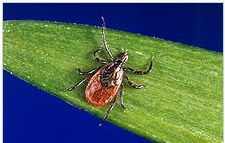
Post Tick Bite First Aid
I have plenty of time available for reading at the moment and i came across this interesting article that i thought would be beneficial to our outdoor community.
2 Amendments added below.
Research News Dec 01, 2011
The Fraunhofer Institute believes they have come up with a gel that will prevent the contraction of Lyme Disease post tick bites.
They come out in the spring, and each year they spread further afield. Thirty percent of ticks transmit borrelia pathogens, the causative agent of Lyme borreliosis that can damage joints and organs. The disease often goes undetected. In the future, a new type of gel is intended to prevent an infection – if applied after a tick bite.
2 Amendments added below.
Research News Dec 01, 2011
The Fraunhofer Institute believes they have come up with a gel that will prevent the contraction of Lyme Disease post tick bites.
They come out in the spring, and each year they spread further afield. Thirty percent of ticks transmit borrelia pathogens, the causative agent of Lyme borreliosis that can damage joints and organs. The disease often goes undetected. In the future, a new type of gel is intended to prevent an infection – if applied after a tick bite.
For years, Mrs. S. suffered from joint pain and headaches. After an odyssey through doctors’ waiting rooms, one doctor diagnosed Lyme borreliosis – an infectious disease transmitted by ticks. With its bite, the parasite introduced bacteria that then spread throughout the entire body. Mrs. S. is not alone – very often, the disease is recognized too late or not at all, or is not properly treated. Doctors are provided with no clues if the characteristic redness around the bite area is missing. Left untreated, Lyme borreliosis can cause symptoms that resemble rheumatism, damage joints, muscles and nerves and affect the organs.
If found in time, it can be successfully treated. If patients exhibit the disease-specific rash known as erythema migrans, doctors will prescribe antibiotics for several weeks. However, if, as in the case of Mrs. S., the disease has progressed far and is chronic, it is very difficult to treat. Currently, there is no prophylactic treatment and no vaccine against the infection. In the future, a new type of gel is supposed to nip the infection in the bud: the patient applies it locally immediately after the tick‘s bite. Researchers of the Fraunhofer Institute for Cell Therapy and Immunology IZI in Leipzig developed the medication in close cooperation with the Swiss company Ixodes AG and the Institute for Infectious Diseases and Zoonoses of the Ludwig-Maximilian University in Munich (Institut für Infektionsmedizin und Zoonosen der LMU München). Ixodes AG is responsible for developing the formula, while IZI and LMU are carrying out the pre-clinical studies and the serological examinations.
If the gel is applied immediately to the bite after the tick has been removed and one does not wait for any potential symptoms to show, Lyme borreliosis could be prevented. This is because during the first few days, the bacteria stay right around the spot where the tick bite occurred and spread out only after that. The active ingredient of the gel is azithromycin, which is highly effective against borrelia bacteria and kills them locally in the skin,“ says Dr. Jens Knauer, project manager at IZI. Unlike other antibiotics, there is no known resistance of borrelia strains against azithromycin. Another advantage of the active ingredient: it has few side effects and as a result does not stress the body. It also distinguishes itself by its good depot action of up to five days in the tissue. The treatment is successful only if the medication is applied within the first few days after the tick‘s bite. „This gel, however, cannot be used to treat an established infection; it is suitable only for prophylaxis,“ emphasizes Dr. Knauer.
If found in time, it can be successfully treated. If patients exhibit the disease-specific rash known as erythema migrans, doctors will prescribe antibiotics for several weeks. However, if, as in the case of Mrs. S., the disease has progressed far and is chronic, it is very difficult to treat. Currently, there is no prophylactic treatment and no vaccine against the infection. In the future, a new type of gel is supposed to nip the infection in the bud: the patient applies it locally immediately after the tick‘s bite. Researchers of the Fraunhofer Institute for Cell Therapy and Immunology IZI in Leipzig developed the medication in close cooperation with the Swiss company Ixodes AG and the Institute for Infectious Diseases and Zoonoses of the Ludwig-Maximilian University in Munich (Institut für Infektionsmedizin und Zoonosen der LMU München). Ixodes AG is responsible for developing the formula, while IZI and LMU are carrying out the pre-clinical studies and the serological examinations.
If the gel is applied immediately to the bite after the tick has been removed and one does not wait for any potential symptoms to show, Lyme borreliosis could be prevented. This is because during the first few days, the bacteria stay right around the spot where the tick bite occurred and spread out only after that. The active ingredient of the gel is azithromycin, which is highly effective against borrelia bacteria and kills them locally in the skin,“ says Dr. Jens Knauer, project manager at IZI. Unlike other antibiotics, there is no known resistance of borrelia strains against azithromycin. Another advantage of the active ingredient: it has few side effects and as a result does not stress the body. It also distinguishes itself by its good depot action of up to five days in the tissue. The treatment is successful only if the medication is applied within the first few days after the tick‘s bite. „This gel, however, cannot be used to treat an established infection; it is suitable only for prophylaxis,“ emphasizes Dr. Knauer.
The pre-clinical studies have already been completed successfully; in mice, the gel was effective even five days after a tick‘s bite. The application has been patented. Starting this past summer, in a clinical phase III study (www.zeckenstudie.com), the researchers are testing the medication on persons with proven tick bites. Should the results of the pre-clinical studies be confirmed on humans, the gel will help to significantly lower the number of new infections,“ the expert adds. Annually, up to 60,000 are stricken with Lyme borreliosis in Germany alone, according to estimates by the Robert Koch Institute, with an upward trend – since, due to climate change, ticks are expanding their range ever further. „As soon as the gel can be purchased at the pharmacy, persons who are particularly endangered, such as forest rangers, hunters, joggers or soccer players, should always carry it with them,“ Knauer recommends.
Although this jell hasn’t made it to the chemist/pharmacy yet. Keep it in the back of your minds for the near future. I have been lucky, only one tick has made it into my skin but this jell would have given me some peace of mind once i had removed it.
In the meantime take some Permethrin with you when walking in tick country just to minimise the possibility of a bite.
Hope you find this useful.
In the meantime take some Permethrin with you when walking in tick country just to minimise the possibility of a bite.
Hope you find this useful.
(Report from the Institutes media.)
Amendment 1. added 8.50pm 3/4/12. following Maria's comment.
TBE Vaccination In the UK
You cannot get the TBE vaccine on the NHS. Your doctor may be able to order it in for you from a specialised travel clinic, but you will still have to pay for the course of vaccine. You may prefer to go directly to your local travel health clinic.
The best time to start a course of TBE vaccination is during the winter months to make sure you are protected before the start of the tick season in spring.
Vaccination course
The TBE vaccine is usually given in three doses, with the second dose given one to three months after the first dose, and the third dose given five and 12 months after the second dose.
If you need more urgent protection, two doses of the vaccine can be given at least two weeks apart. In this case, the third dose should be given five to 12 months after the second dose.
If you are under 60, you should have your first booster three years after your original course of the vaccine. Further boosters should be given every three to five years.
If you are over 60, you should have booster doses every three years. This is because studies have shown that TBE immunity (resistance) does not last as long in older people.
Side effects
Any reactions to the TBE vaccination are usually mild and do not last long.
Adults may experience swelling, redness and pain at the site of the injection. Other possible side effects include tiredness, headache, muscle pain and nausea.
Children usually experience mild side effects such as pain and tenderness at the site of injection, restlessness and headache. They may also experience a fever (temperature of 38C (100.4F) or above) after their first dose of the vaccine. In very rare cases, a more serious reaction can cause meningitis.
Precautions
You should not have the vaccination if:
- You are allergic to eggs (as the vaccine contains egg protein).
- You have a fever.
You must also tell your doctor or nurse if any of the following apply to you:
- You have problems with your immune system.
- You have a brain disorder.
- You are pregnant.
- You are breastfeeding.
You may still be advised to have the vaccine, but your doctor or nurse will need to check your risk with a travel medicine specialist before giving it to you.
Amendment 2. Added 10.32 6/4/12
I made enquiries at Boots and Nomad travel yesterday and was stunned.
Nomad travel. First have a consultation with a nurse at Nomad. Cost £20.
No need to go to your GP. No prescription needed.
3 shots required. First shot £55
2nd shot within 3 months of the 1st. Cost £55
Then a booster shot 6 - 12 months later cost £55.
Boots.
They told me that they would do the vaccination but only with a prescription from my GP.
But, they said that almost all GP’s would do the vaccination at the surgery and therefore would not need to pay a nurse like you would at Boots.
You will probably (i think you will) have to pay for the serum.
That’s quite a fair response from Boots.
GP next then.
I made enquiries at Boots and Nomad travel yesterday and was stunned.
Nomad travel. First have a consultation with a nurse at Nomad. Cost £20.
No need to go to your GP. No prescription needed.
3 shots required. First shot £55
2nd shot within 3 months of the 1st. Cost £55
Then a booster shot 6 - 12 months later cost £55.
Boots.
They told me that they would do the vaccination but only with a prescription from my GP.
But, they said that almost all GP’s would do the vaccination at the surgery and therefore would not need to pay a nurse like you would at Boots.
You will probably (i think you will) have to pay for the serum.
That’s quite a fair response from Boots.
GP next then.
Monday, November 29, 2010
My First Aid Kit
Following a useful post on Maz’s blog which you can find here regarding our first aid kits, i have now photographed mine and displayed it here for all to compare and hopefully comment on.
Contents from top down.
Holdall
Non stick pad. Strip of std plasters. A sponge pad. A 2nd non stick pad.
Iodine wipes. Plaster strip. Moleskin plaster. Cleansing wipes. Insect Bite wipes.
Blister plasters. A burn sheet. An almost empty Savlon tube. Tick remover. Lip balm. Small Emery board.
Roll of tape. Paracetamol. Zantac. Whistle. Recently added button compass. Dicloflex. Periton. small bandage.
I have scissors and tweezers on my Victorinox classic knife.
I would also carry, foot powder, sun tan lotion, and Insect repellant, dependant on the time of year.
The whole kit weighs 87gr.
Well i think that’s it. Any comments gratefully accepted as always.
Contents from top down.
Holdall
Non stick pad. Strip of std plasters. A sponge pad. A 2nd non stick pad.
Iodine wipes. Plaster strip. Moleskin plaster. Cleansing wipes. Insect Bite wipes.
Blister plasters. A burn sheet. An almost empty Savlon tube. Tick remover. Lip balm. Small Emery board.
Roll of tape. Paracetamol. Zantac. Whistle. Recently added button compass. Dicloflex. Periton. small bandage.
I have scissors and tweezers on my Victorinox classic knife.
I would also carry, foot powder, sun tan lotion, and Insect repellant, dependant on the time of year.
The whole kit weighs 87gr.
Well i think that’s it. Any comments gratefully accepted as always.
Subscribe to:
Posts (Atom)
Find it Here
About Me
- AlanR
- My other blog. beneathwhosefeet.wordpress.com